


GUIDANCE FOR YOUR FUTURE

The OpenClaw Story #6: Your OpenClaw Roadmap: How to Prepare for the AI Marketing Revolution
You Made It
You've made it through five posts.
You've learned about OpenClaw's explosive growth from a weekend project to 100,000 GitHub stars. You've understood what "AI with hands" actually means. You've seen real use cases—from CRMs that build themselves to nightly board meetings of AI agents. You've heard the warnings about cost explosions, data risks, and prompt injections. And you've learned why AI won't replace you, but will change what you do.
Now you're probably wondering: "What should I actually do next?"
This final post is your practical roadmap. No hype. No fear. Just clear, actionable steps based on where you are in your journey.
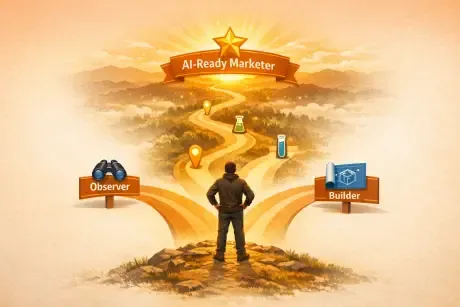
Three Paths, One Destination
Not everyone needs to install OpenClaw. In fact, most people shouldn't—at least not yet.
The right path depends on your technical comfort, your business stage, and your appetite for risk. Let me help you find yours.

Path 1: The Observer (For Most systeme.io Beginners)
Who this is for:
You're still learning the basics of systeme.io
Your business isn't yet generating consistent revenue
You don't have technical support or development skills
The thought of command lines makes you nervous (and that's fine!)
Your job right now is to watch and learn. Nothing more.
OpenClaw is still evolving rapidly. The tools that exist today will look primitive in a year. The security concerns are real and not fully solved. The project's own maintainers are brutally honest: "If you don't understand how to use the command line, this project is too dangerous for you to use safely."
Your action items:
Bookmark these resources
openclaw.ai (official site)
GitHub.com/openclaw (watch the repository)
OpenClaw Discord/Reddit communities (just lurk and learn)
Subscribe to AI newsletters (one is enough—don't overwhelm yourself)
The Neuron, TLDR AI, or similar
Practice explaining OpenClaw to another systeme.io user. Teaching helps you learn.
Master systeme.io first. The better you are at your core tool, the more you'll benefit from automation later.
Revisit this decision in 6 months. The landscape will be clearer, safer, and more accessible.
Why this path is valid: The early adopters take the arrows. By waiting, you let others discover the pitfalls. You'll step into a more mature ecosystem with better guardrails and simpler tools.
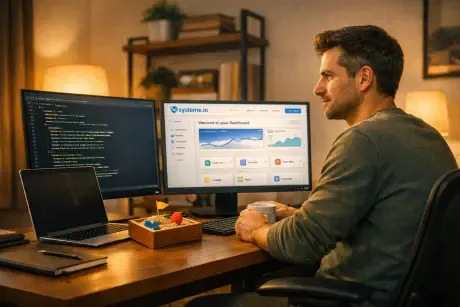
Path 2: The Experimenter (For Growing, Curious systeme.io Users)
Who this is for:
You're comfortable with systeme.io and have a growing business
You have some technical curiosity (maybe you've used Zapier or basic APIs)
You're willing to risk small amounts of time and money to learn
You understand that this is an experiment, not a production system
Your job is to learn safely. Start small. Never risk real customer data.
What you'll need:
Basic comfort with command line (you can follow tutorials)
A spare computer, virtual machine, or cheap cloud server ($5-15/month)
API keys from an AI provider (OpenAI, Anthropic, or open-source models)
Estimated costs for learning:
Hosting: $5-15/month (Hetzner, DigitalOcean, or similar)
Token costs: $15-35/month for 5,000-10,000 AI calls
Total: $20-50/month for learning
Your action items:
Read the OpenClaw documentation thoroughly before installing anything.
Set up an isolated test environment. Never run OpenClaw on your main computer or with access to real customer data.
Use cheap AI models. Start with GPT-4o-mini or open-source models like Qwen. Save the expensive models for later.
Set hard spending limits. Most AI providers let you set API spend caps. Start with $10/month and increase only when you understand your usage.
Start with ONE simple automation. For example: "Every morning, check my systeme.io test account and send me the number of new leads from yesterday."
Never connect it to your real systeme.io account until you've tested for at least two weeks with dummy data.
Join the OpenClaw Discord and learn from others' mistakes. Ask questions before you break things.
A word of caution: Even as an experimenter, you can get burned. Always have a way to shut everything down. Always keep backups. Never leave API keys in code you share.

Path 3: The Builder (For Advanced Users with Technical Resources)
Who this is for:
You have development skills or access to technical help
You're running a substantial business where automation delivers clear ROI
You're willing to invest in custom solutions and ongoing maintenance
You understand security, monitoring, and risk management
Your job is to build competitive advantages now—safely and professionally.
What you'll need:
Dedicated server setup with proper security (firewalls, non-root users, regular updates)
Understanding of API rate limits, error handling, and cost monitoring
Time for ongoing maintenance and debugging
Estimated investment:
Hosting: $10-25/month for better performance
Token costs: $50-200+/month depending on usage
Development time: Significant initial setup (10-40 hours)
Ongoing maintenance: Regular updates and monitoring (2-5 hours/week)
Your action items:
Work with a developer who understands security. If you're not a developer, hire one. This is not a DIY project at this scale.
Implement the principle of least privilege. Give OpenClaw only the access it absolutely needs—and nothing more.
Set up monitoring and alerts. Track token usage, error rates, and system health. Get alerted before costs spiral.
Create a kill switch. Ensure you can shut down all automations instantly if something goes wrong.
Document everything. You need to understand what's running and why, especially if you ever need to debug it at 2 AM.
Start with non-critical workflows. Automate reporting and monitoring before you automate customer communication.
Plan for the worst. What happens if your API key is stolen? What happens if OpenClaw deletes data? Have backups and recovery plans.
The Builder's advantage: You'll gain efficiency and insights that competitors without automation can't match. But with that advantage comes responsibility. Don't cut corners on security.
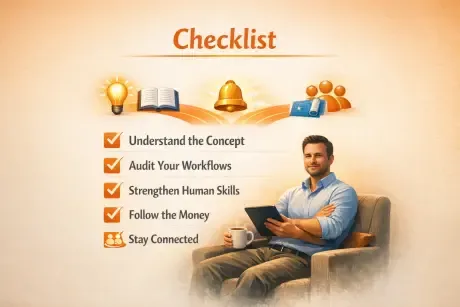
What Everyone Should Do (Regardless of Path)
No matter which path you choose, there are things every marketer should do to prepare for this shift.
1. Understand the concept, not just the tool.
OpenClaw is one implementation of a bigger idea: AI agents that can act independently. Whether OpenClaw survives or is replaced by something else, the concept of "AI with hands" is here to stay. Make sure you understand what it enables.
2. Audit your current workflows.
Take 30 minutes this week. Write down every repetitive task you do daily or weekly. What takes time but doesn't require creativity? What feels like a chore? These are the things that will be automated first.
3. Strengthen your human skills.
As automation handles more tasks, human skills become more valuable. Deepen your understanding of your customers. Get better at telling stories. Build relationships that can't be automated. These investments pay off regardless of what technology emerges.
4. Follow the money.
Watch where big companies are investing. When cloud providers start offering one-click OpenClaw deployments, pay attention. When governments issue warnings or regulations, pay attention. The signals are there if you watch for them.
5. Stay connected to communities.
The fastest way to learn is from others' mistakes. Find communities where early adopters share both successes and failures. Reddit, Discord, LinkedIn groups—pick one and lurk. Learn from their experiences without having to repeat them.

The systeme.io Connection One More Time
Throughout this series, I've kept coming back to one idea:
systeme.io gave you the power to build a business without technical skills. OpenClaw represents the next wave—the power to automate that business without hiring a team.
You don't need to be first. You don't need to be an expert. But you do need to be aware, curious, and prepared.
The skills you've already learned—building funnels, segmenting audiences, crafting email sequences, analyzing results—are the same skills that will make you effective with AI. You're not starting from zero. You're building on a foundation you already have.
You don't need to follow every trend. You don't need to install every tool. But you do need to keep learning, keep asking questions, and keep focusing on what matters: serving your customers.

Final Thought
Someone once asked me: "When's the right time to learn about a new technology?"
I think the answer is: before you need it, but after you understand it.
For OpenClaw—and for AI agents in marketing—that time is now.
You don't need to be a builder. You don't need to install anything today. But you do need to be an observer. You do need to understand the shift that's happening. Because when the tools become simple, safe, and accessible—and they will—you'll be ready.
And I'll be right here, helping you navigate the journey.
Thank you for reading this series. If it helped you, share it with another systeme.io user who needs to hear it.
— TECHguy

Located in the Swedish part of Finland - Available World-Wide
TECHguy is a brand operated by Ab Söderholms IT-tjänster Oy.
Registered in Finland